Healing Through Reflection: The Power of 300 Grief Journal Prompts
Grief is a complex and deeply personal experience, often leaving individuals searching for ways to process their emotions and find meaning in loss. One powerful tool that has gained recognition for its therapeutic value is the 300 Grief Journal Prompts. Designed to offer structure and guidance, this resource provides a compassionate approach to navigating the emotional landscape of grief. Whether you're coping with the loss of a loved one, a relationship, or a life-changing event, these prompts can serve as a meaningful way to explore your feelings and begin the healing journey.
Understanding the Role of Grief Journaling
Grief journaling is more than just writing down thoughts—it’s a form of emotional expression that allows individuals to confront their pain, acknowledge their memories, and gradually make sense of their experiences. The 300 Grief Journal Prompts are specifically crafted to encourage this kind of introspection. Each prompt is designed to be open-ended, inviting users to reflect on their emotions, memories, and evolving perspectives without judgment.
One of the key benefits of using these prompts is that they help create a safe space for vulnerability. Grief can be overwhelming, and many people feel unsure of how to articulate their feelings. The 300 Grief Journal Prompts provide a structured yet flexible framework, making it easier for individuals to engage with their emotions in a thoughtful and intentional way.
How 300 Grief Journal Prompts Can Help You Process Loss
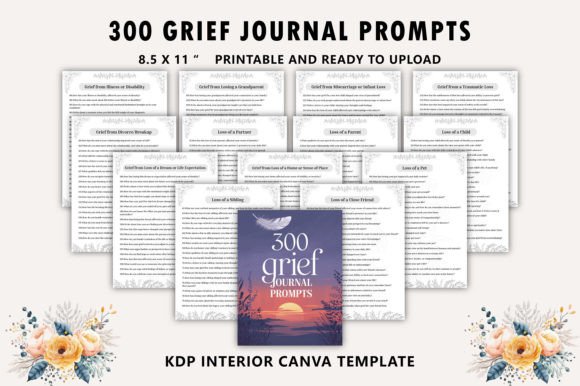
The variety of topics covered in the 300 Grief Journal Prompts makes it a versatile resource for anyone experiencing different types of loss. From the death of a parent or child to the end of a relationship or career, the prompts address a wide range of emotional challenges. This diversity ensures that no matter what type of grief you’re facing, there will be prompts that resonate with your specific situation.
For example, if you’re grieving the loss of a partner, a prompt like “What moments with your partner brought you the most joy?” encourages you to focus on positive memories while also acknowledging the pain of absence. Similarly, if you’re dealing with the loss of a job, a prompt such as “What did your job mean to you beyond just income?” helps you reflect on the emotional significance of your work and how it shaped your identity.
This level of personalization is one of the strengths of the 300 Grief Journal Prompts. By offering a broad spectrum of questions, it allows users to tailor their journaling practice to their unique experiences, ensuring that the process remains relevant and impactful.
Customizing Your Experience with 300 Grief Journal Prompts Editable on Canva
While the 300 Grief Journal Prompts provide a solid foundation, many users may want to further personalize their experience. That’s where the 300 Grief Journal Prompts Editable on Canva comes into play. With Canva’s user-friendly design tools, you can customize the layout, add visual elements, and create a journal that reflects your style and preferences.
This flexibility is especially valuable for those who want to turn their journaling practice into a more creative or artistic endeavor. You can choose colors, fonts, and images that evoke a sense of calm and comfort, making the act of journaling not only therapeutic but also visually engaging. Whether you prefer a minimalist look or something more expressive, the editable features allow you to shape the journal into a reflection of your personal journey.
Additionally, the ability to edit and rearrange prompts means you can prioritize the questions that are most relevant to your current emotional state. This adaptability ensures that the journal remains a dynamic tool that evolves with you over time.
Exploring Different Types of Grief Through the Prompts
The 300 Grief Journal Prompts cover a wide array of grief experiences, each with its own unique challenges and emotional nuances. For instance, the prompts addressing the loss of a parent or grandparent often focus on legacy, family history, and the impact of their presence in your life. These questions can help you honor their memory while also processing your own feelings of absence and longing.
When it comes to the loss of a child or a miscarriage, the prompts are particularly sensitive and supportive. They encourage reflection on the bond between parent and child, the dreams and hopes that were shared, and the ongoing emotional journey of mourning. These questions can be especially helpful for parents who feel isolated in their grief, offering a way to express their pain and find solace in shared experiences.
The prompts also address less commonly discussed forms of grief, such as the loss of a home or a sense of place. These situations can be just as emotionally taxing as the loss of a person, and the 300 Grief Journal Prompts provide a space to explore the emotional weight of such changes. Questions like “How did your home shape your sense of security?” or “What memories are tied to the place you’ve lost?” help you unpack the complex emotions associated with displacement.
Practical Benefits of Using Grief Journal Prompts
Beyond the emotional benefits, the 300 Grief Journal Prompts offer practical advantages that can enhance your healing process. Regular journaling has been shown to reduce stress, improve mental clarity, and foster a greater sense of self-awareness. By engaging with these prompts consistently, you can develop a deeper understanding of your emotional patterns and learn to navigate difficult feelings with more resilience.
Another benefit is the opportunity for self-compassion. Grief can be isolating, and many people struggle with feelings of guilt or shame. The prompts encourage a non-judgmental approach, allowing you to acknowledge your pain without criticism. This mindset shift can be transformative, helping you move toward acceptance and healing.
Finally, the 300 Grief Journal Prompts can serve as a long-term resource. As you progress through your grief journey, you may revisit certain prompts to see how your perspective has changed. This ongoing reflection can provide a sense of growth and closure, reinforcing the idea that healing is a continuous process rather than a fixed destination.